What Is Laser Hair Removal for Dark Skin and How It Works?

Time:2026-10-07 Author:Isabella
0%

Laser hair removal for dark skin requires careful control of light, heat, and timing. Melanin exists in both the hair shaft and surrounding skin. That overlap increases the risk of burns, temporary darkening, or light spots. So, device choice matters greatly. Long-pulsed 1064-nanometer Nd:YAG lasers generally penetrate deeper and reduce melanin absorption near the surface. However, settings must match skin tone, hair thickness, body area, and recent sun exposure.

How does laser hair removal work on dark skin? The laser delivers controlled energy into the hair pigment. Heat travels toward the follicle and weakens its growth center. Treated hairs may smell like singed hair and shed over several days. Most people need multiple sessions because hair grows in different cycles. Cooling tips, test patches, protective eyewear, and trained supervision are essential. A darker complexion is not a reason to avoid treatment, but it is a reason to avoid rushed treatment.

The American Academy of Dermatology recommends professional assessment and recognizes temporary redness and swelling as common effects. FDA-cleared devices and manufacturer instructions also emphasize appropriate settings, eye protection, and skin evaluation. The International Society of Aesthetic Plastic Surgery’s Global Survey lists laser hair removal among widely performed nonsurgical procedures worldwide, showing its established industry presence. Yet broad industry figures rarely separate results for Fitzpatrick skin types IV to VI. That gap matters. Research supports safer protocols, but outcomes still vary between devices, operators, and patients. A realistic consultation should discuss patch testing, maintenance sessions, medication history, and possible pigment changes—not promise flawless permanence.
What Is Laser Hair Removal for Dark Skin and How It Works?

What Laser Hair Removal Means for Dark Skin

Laser hair removal for dark skin means treating hair while protecting the melanin-rich skin around it. Melanin absorbs laser energy, so poorly selected settings may cause burns, dark marks, or lighter patches. The process targets pigment in the hair follicle, gradually reducing active growth over several sessions.

Skin tone alone does not determine safety. A trained practitioner should assess your complexion, hair thickness, medical history, and recent sun exposure. Longer wavelengths are often considered for deeper skin tones because they can reduce surface pigment absorption. However, the device and settings must match the individual. A patch test on a small area is essential. It is not a guarantee.

Expect temporary warmth, mild swelling, or small red bumps around the follicles. These reactions often fade within a day or two. Shaving is usually preferred before treatment, while waxing can remove the target hair from the root. Avoiding tanning and using broad-spectrum sunscreen helps lower irritation and pigment changes. Hair grows in cycles, so results are gradual rather than instant. Several appointments may be needed.

It is easy to promise permanent smoothness. That wording is too simple. Hormones, hair color, and treatment timing affect outcomes. Very light, gray, or red hair may respond poorly because it contains less usable pigment. Careful records, honest follow-up, and adjusted settings matter more than speed.

How Laser Energy Targets Hair Without Damaging Skin

What Is Laser Hair Removal for Dark Skin and How It Works?

Laser hair removal uses concentrated light to heat melanin inside the hair follicle. The energy travels through the hair shaft and weakens future growth. Darker skin also contains more melanin, so the treatment requires careful control. Excessive energy may irritate the epidermis or cause temporary darkening. Proper settings matter more than speed.

An experienced, qualified professional should select the wavelength, pulse duration, and cooling method for your skin tone. A patch test can reveal unexpected reactions before treating a larger area. Hair grows in cycles, so several sessions are usually needed. Results vary by hair thickness, hormones, and treatment area. Not every session feels the same. That detail deserves attention.

Tips: Avoid tanning before and after treatment. Shave the area instead of waxing or plucking. Tell the clinician about recent skin products, medications, or previous pigmentation changes. Ask how they protect darker skin during treatment. A slight warmth or snapping sensation can be normal, but severe pain is not something to ignore. Be willing to pause and reassess.

Which Laser Technologies Suit Darker Skin Tones

Laser hair removal for dark skin requires careful control of light energy. Melanin exists in both the hair follicle and surrounding skin. If the laser absorbs too much pigment, burns, blisters, or temporary darkening may occur. Darker skin tones, including Fitzpatrick V and VI, need a conservative treatment plan.

The 1064 nm Nd:YAG laser is often considered the safest option for deeper skin tones. Its longer wavelength penetrates toward the follicle while reducing absorption in the surface pigment. This can lower the risk of discoloration. However, safety still depends on accurate settings, effective cooling, and the operator’s training. A diode laser may also suit some darker skin, especially when the hair is coarse and deeply rooted. Its results vary between devices and skin types.

Shorter-wavelength alexandrite lasers can work well on lighter skin, but they may create greater pigment risk for dark skin. Intense pulsed light is not a laser and usually requires extra caution. A qualified practitioner should assess recent tanning, medications, hair thickness, and previous reactions. A small patch test matters. It may feel slow, but skipping it is a poor trade-off. No technology is completely risk-free. Even with careful treatment, temporary swelling or uneven pigmentation can appear. My own view is simple: the “strongest” setting is not automatically the best setting. Consistent sessions, realistic expectations, and skin monitoring usually matter more.

What Happens During a Laser Hair Removal Session

During a laser hair removal session, the practitioner first checks your skin tone, hair color, medical history, and recent sun exposure. Dark skin contains more melanin, which can absorb laser energy and increase burn or pigmentation risks. For this reason, professionals often consider a long-pulsed 1,064-nanometer Nd:YAG laser for deeper skin tones. A peer-reviewed review in the Journal of the American Academy of Dermatology describes this wavelength as a safer option for many darker skin types, when properly adjusted.

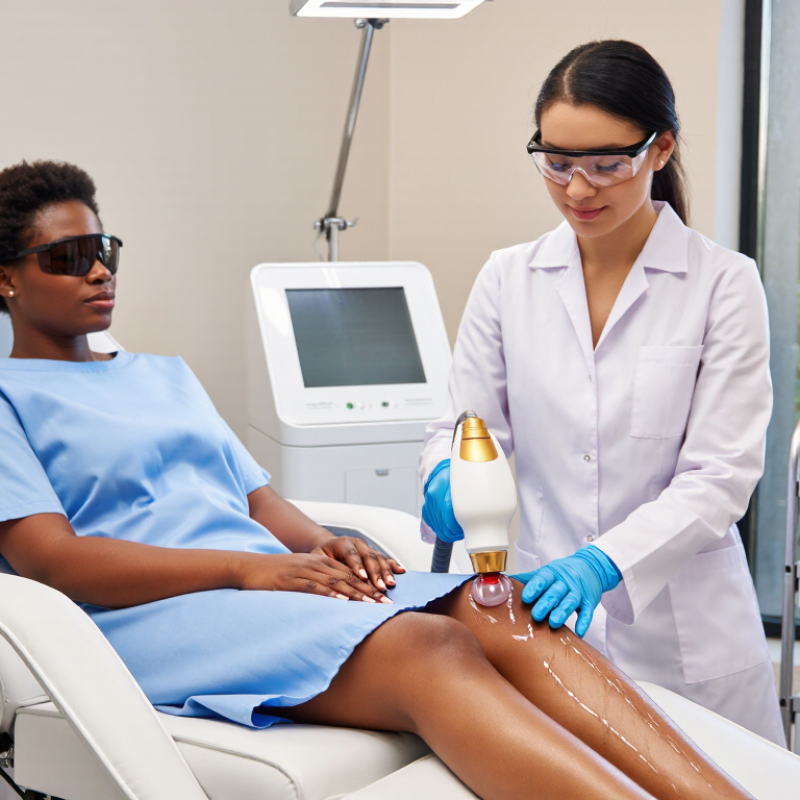
The treatment area is cleaned and usually shaved. You wear protective eyewear while the practitioner places the handheld device against your skin. Each pulse may feel like a warm snap or a small rubber-band flick. Cooling air or a chilled contact surface can reduce discomfort. Small areas may take 10 minutes, while larger areas can require an hour. Temporary redness or swelling around each follicle is common. It should fade within several hours, but reactions vary. A qualified provider should begin conservatively and perform a patch test before treating a large area.

Tips: Avoid tanning before and after treatment. Tell the practitioner about medications, active skin irritation, or recent hair-removal methods. The American Academy of Dermatology notes that patients often need six or more sessions because hair grows in cycles. The U.S. FDA defines permanent hair reduction through stable regrowth reduction measured over six, nine, and twelve months. Results are gradual, not guaranteed. Even experienced clinicians sometimes need to adjust settings after observing your skin’s response.

What Happens During a Laser Hair Removal Session for Dark Skin?

A typical session includes a brief skin check, preparation, a small patch test when appropriate, laser treatment, and cooling or aftercare. Actual timing varies by treatment area, hair density, and skin response. For darker skin tones, qualified providers often use conservative settings and carefully monitor the skin to reduce the risk of burns or temporary pigmentation changes.

Safety, Results, and Possible Side Effects for Dark Skin

Laser hair removal for dark skin requires careful control because the skin contains more melanin. Melanin can absorb laser energy intended for the hair follicle. This increases the risk of burns, blistering, or temporary color changes.

A qualified medical professional should assess your skin tone, hair type, medications, and tanning history. A patch test can reveal how your skin reacts before treating a larger area. Longer-wavelength technology, often used for deeper follicles, may reduce surface absorption when operated correctly. Settings still matter greatly. No device is automatically safe for everyone.

Most people need several sessions because hair grows in different cycles. Results usually mean long-term hair reduction, not perfectly permanent removal. Shaving may become easier, and regrowth can appear finer. Hormonal changes may trigger new growth. That part is often overlooked.

Common reactions include redness, warmth, and small bumps around the follicles. They usually fade within a day or two. Dark or light patches can last longer, especially after excessive sun exposure. Serious reactions are uncommon but possible with incorrect settings or poor aftercare. Avoid tanning, use broad-spectrum sunscreen, and follow the clinic’s instructions. The process is not painless for everyone. I would not treat a lower price as proof of safe treatment. Ask who performs the procedure, which wavelength is used, and how complications are managed.

FAQS

How does laser hair removal target hair on dark skin?

Concentrated light heats melanin inside the hair follicle. The energy travels through the hair shaft and weakens future growth. Darker skin also contains melanin, so energy must be controlled carefully.

Which laser wavelength may suit deeper skin tones?

A longer wavelength, commonly 1064 nm, may reduce absorption by surface pigment. It still requires accurate settings, cooling, and trained operation. No device is automatically safe for everyone.

Why is a patch test important?

A small test area can reveal unexpected redness, darkening, or irritation. It may feel slow. Skipping it is a poor trade-off.

How many treatment sessions are usually needed?

Several sessions are commonly required because hair grows in different cycles. Results usually mean long-term reduction, not perfectly permanent removal. Hormonal changes can trigger new growth.

What should I do before treatment?

Avoid tanning before and after treatment. Shave the area instead of waxing or plucking. Tell the clinician about medications, skin products, and previous pigmentation changes.

What sensations are normal during treatment?

Mild warmth, redness, or a snapping sensation can occur. Small bumps may appear around follicles. Severe pain is not something to ignore.

What side effects can affect dark skin?

Temporary swelling, redness, or uneven pigmentation may occur. Dark or light patches can last longer after sun exposure. Burns and blistering are uncommon, but incorrect settings increase the risk.

Is the strongest treatment setting the best choice?

Not always. A stronger setting may increase irritation or color changes without improving results. Conservative settings, cooling, and skin monitoring deserve more attention. I may have underestimated how much patience matters.

How can I judge whether a treatment provider is suitable?

Ask who performs the procedure and which wavelength is used. Ask how darker skin is protected and how complications are managed. A lower price does not prove safe treatment.

Conclusion

Laser hair removal for dark skin uses controlled light energy to reduce unwanted hair while carefully protecting the surrounding skin. How does laser hair removal work on dark skin? The treatment focuses energy on the pigment in the hair follicle, creating heat that weakens the follicle and slows future growth. Because darker skin contains more pigment, the settings and technology must be selected and adjusted carefully to reduce the risk of burns or uneven pigmentation. Certain longer-wavelength systems and professional techniques are generally better suited to deeper skin tones.

During a session, the skin is cleansed, protective measures are applied, and brief pulses of light target the treatment area. Patients may feel warmth or small pinpricks, followed by temporary redness or swelling. Several sessions are usually needed because hair grows in different cycles. When performed by a qualified professional, the treatment can provide long-term hair reduction, although results vary. Possible side effects include temporary irritation, dark or light spots, and, rarely, blistering or scarring, making consultation and aftercare essential.

Isabella

Isabella

Isabella is a dedicated marketing professional with a sharp focus on driving brand growth and engagement through strategic content creation. With an extensive background in digital marketing, she combines her passion for storytelling with her keen understanding of industry trends to deliver......