Which Is Better IPL or Diode Laser Hair Removal?
Choosing a hair-removal device is not as simple as comparing two names on a clinic menu. Which is better IPL or diode laser hair removal depends on your skin tone, hair color, treatment area, and the device settings used. IPL delivers filtered pulses of broad-spectrum light. A diode laser uses a more focused wavelength. Both aim to heat pigment in hair follicles, but neither works equally well for everyone.
Laser specialist and dermatologist Dr. Tina Alster emphasizes the importance of tailoring light-based treatments to the individual. In practice, that means assessing skin and hair before choosing a device—not assuming one technology is always superior. Dark, coarse hair may respond differently from fine, light hair. A provider should also explain expected discomfort, the number of sessions, and possible skin reactions. Ask how they protect your eyes and whether a test spot is appropriate. Details matter.
The comparison can feel less tidy than online charts suggest. IPL devices vary, and diode systems differ in wavelength, cooling, and settings. A treatment that feels quick may still need repeated visits. Results are usually described as long-term hair reduction, not guaranteed permanent removal. That distinction is easy to overlook. If your skin is recently tanned, or your hair has little pigment, the best choice may change—or treatment may need to wait. A qualified clinician can review your history and set realistic expectations. This guide compares comfort, effectiveness, cost, and suitability, while leaving room for the fact that individual results vary.
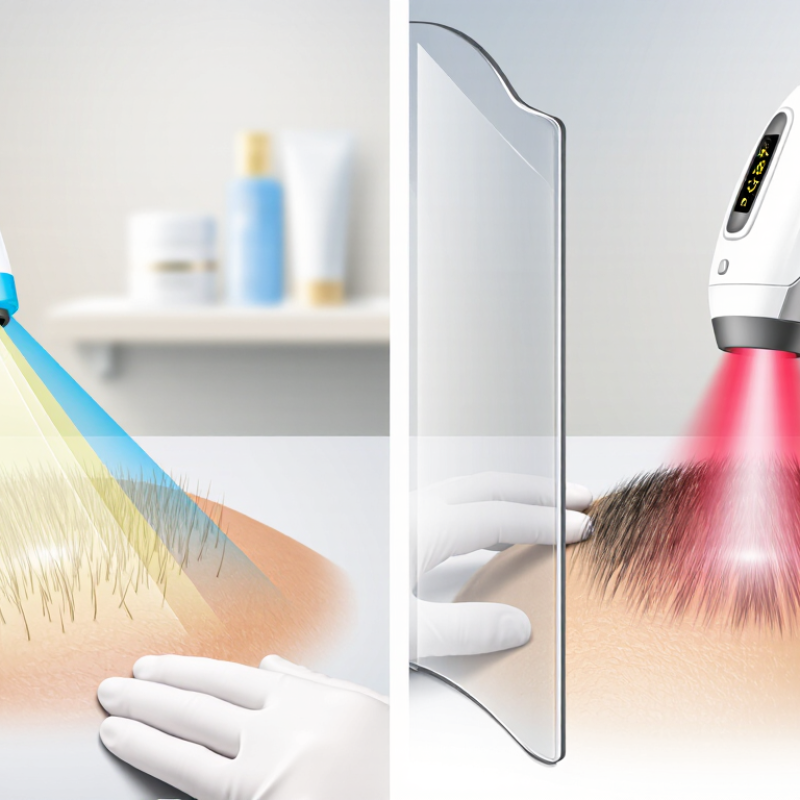
IPL and Diode Laser Hair Removal: Definitions and Key Differences
IPL and diode laser hair removal both reduce unwanted hair by directing light toward pigment in the hair. They are not the same technology. IPL, or intense pulsed light, sends broad-spectrum flashes through filters. A diode device emits a narrower band of laser light, usually aimed at melanin in the hair shaft and follicle. That distinction matters.
In practice, IPL may cover a wider area with each flash, while diode systems deliver more focused light. Neither method guarantees permanent hair removal; results often mean long-term reduction and may require several sessions. Hair color, skin tone, treatment settings, and growth cycles all affect outcomes. Dark, coarse hair often responds better than pale, gray, or red hair, but individual results vary. “Laser” and “light” descriptions can sound simple; device settings and practitioner skill make comparisons less tidy.
Tips: Ask what technology is being used, how settings are chosen for your skin, and whether a patch test is appropriate. Wear the supplied eye protection. Avoid treatment on recently tanned skin unless a qualified provider advises otherwise. A consultation should cover medical history and possible side effects, such as temporary redness or pigment changes. I’d be cautious about promises of painless, permanent results; those claims leave out real variation between people.
Which Is Better IPL or Diode Laser Hair Removal? - IPL and Diode Laser Hair Removal: Definitions and Key Differences
| Comparison point | IPL hair reduction | Diode laser hair reduction |
|---|---|---|
| What it is | Intense pulsed light (IPL) is a broad-spectrum light treatment, not a laser. Filters select a range of wavelengths for treatment. | A laser treatment that delivers light concentrated around a specific wavelength. Many hair-removal diode systems operate near 800–810 nm. |
| How it works | Light is absorbed by pigment in the hair and converted to heat, which can damage the follicle and reduce future growth. | Laser energy is absorbed by hair pigment and heats the follicle. Both methods rely on selective heating and work best when hair is in an active growth phase. |
| Light delivery | Uses a range of wavelengths; the delivered range depends on the device and its filters. | Uses a narrower, more targeted wavelength range than IPL. |
| Typical treatment fit | May suit people with a strong contrast between dark hair and lighter skin, depending on the device and treatment settings. | May be suitable for a range of skin tones when the device, settings, and technique are chosen appropriately. Suitability should be assessed by a qualified practitioner. |
| Hair color response | Usually responds best to coarse, dark hair. Blonde, red, gray, or white hair often responds poorly because it has less suitable pigment. | Also usually responds best to coarse, dark hair. Light-colored or gray hair may not respond well. |
| Number of sessions | Multiple sessions are generally needed because hair grows in cycles. The number and spacing depend on the area, device, and individual response. | Multiple sessions are also generally needed for the same hair-growth-cycle reason. A practitioner should set the schedule for the individual. |
| Results | Can provide long-term hair reduction, but results vary and maintenance treatments may be needed. It does not guarantee complete or permanent removal. | Can provide long-term hair reduction, but results vary and maintenance treatments may be needed. It does not guarantee complete or permanent removal. |
| Comfort and side effects | Temporary redness, swelling, or discomfort can occur. Incorrect settings or treatment of tanned skin can increase the risk of burns or pigment changes. | Temporary redness, swelling, or discomfort can occur. Incorrect settings or treatment of tanned skin can increase the risk of burns or pigment changes. |
| Which may be better? | May be a reasonable option when the device and settings match the person’s skin and hair characteristics. | May be a reasonable option when a targeted laser is appropriate for the person’s skin and hair characteristics. Neither method is universally better; an assessment by a qualified professional is important. |
Safety note: Avoid treatment on recently tanned skin and follow the provider’s pre- and post-treatment instructions. A qualified practitioner can assess skin tone, hair color, medical history, and device suitability.
FAQS
IPL uses broad-spectrum flashes through filters. Diode devices use a narrower laser wavelength, often around 800–810 nm. Neither suits everyone.
Coarse, dark hair often responds better because it contains more pigment. Blonde, red, gray, and white hair may respond poorly. Results still vary.
Yes. Skin tone affects how much light the skin absorbs. A qualified provider should assess your skin, especially if it is deeply pigmented or recently tanned.
Several sessions are common because hair grows in cycles. Maintenance may also be needed. Long-term reduction is more realistic than permanent removal.
IPL may cover more skin with each flash. Diode treatment may provide more focused energy for areas like lower legs or underarms. Equipment matters.
Ask how settings will match your skin and hair. Also ask about patch testing, cooling, protective eyewear, and who will operate the device.
Temporary redness or pigment changes can occur. Recent tanning and some medications may affect suitability. Ask for a personal risk assessment.
A small upper-lip area may take minutes, while both legs take longer. Ask about likely costs and results. It varies.
Conclusion
IPL and diode laser hair removal both use light-based energy to target pigment in hair and gradually reduce regrowth, but they differ in how that energy is delivered. IPL uses a broad spectrum of light, while diode treatments use a more focused wavelength. Results depend on factors such as hair color, skin tone, treatment area, and consistency. Both methods may require a series of sessions, and some people experience temporary redness or sensitivity. A qualified professional can help assess suitability and discuss precautions.
Which is better IPL or diode laser hair removal depends on individual needs rather than one method being best for everyone. Diode treatments may be a suitable option for some people seeking focused treatment, while IPL may appeal to those looking for a different approach or considering at-home devices. Comparing expected effectiveness, comfort, safety, cost, and compatibility with your skin and hair type can help guide the choice. A consultation is a practical way to identify the option that best fits your circumstances.
