At-home skin tightening devices can look simple on a product page, yet their technologies, settings, and instructions vary. Some use radiofrequency, microcurrent, or light-based energy, and each requires different handling. This guide explains How to use an at home skin tightening device safely, what to check before starting, and how to build a sensible routine. A polished advertisement is not a substitute for clear instructions.
Begin by reading the manufacturer’s manual and checking whether the device is suitable for your skin and health circumstances. Clean, dry skin may be required, while some models need a specific gel. Follow the stated treatment areas, contact time, and frequency. Do not use a device over irritated or broken skin, and stop if you feel unusual pain, excessive heat, or persistent redness. Small steps matter. A patch test can be useful when the instructions recommend one.
Keep expectations realistic. Home devices may offer gradual, modest changes, but results differ by person and device. They are not equivalent to professional treatment, and more frequent use does not necessarily mean better results. Take a photo in consistent lighting, note your settings, and review progress over several weeks rather than judging by one session. If you have a skin condition, implanted medical device, or uncertainty about a warning in the manual, ask a qualified healthcare professional before use. Less can be more. I would also question any promise of dramatic, permanent tightening; honest guidance should leave room for individual differences.
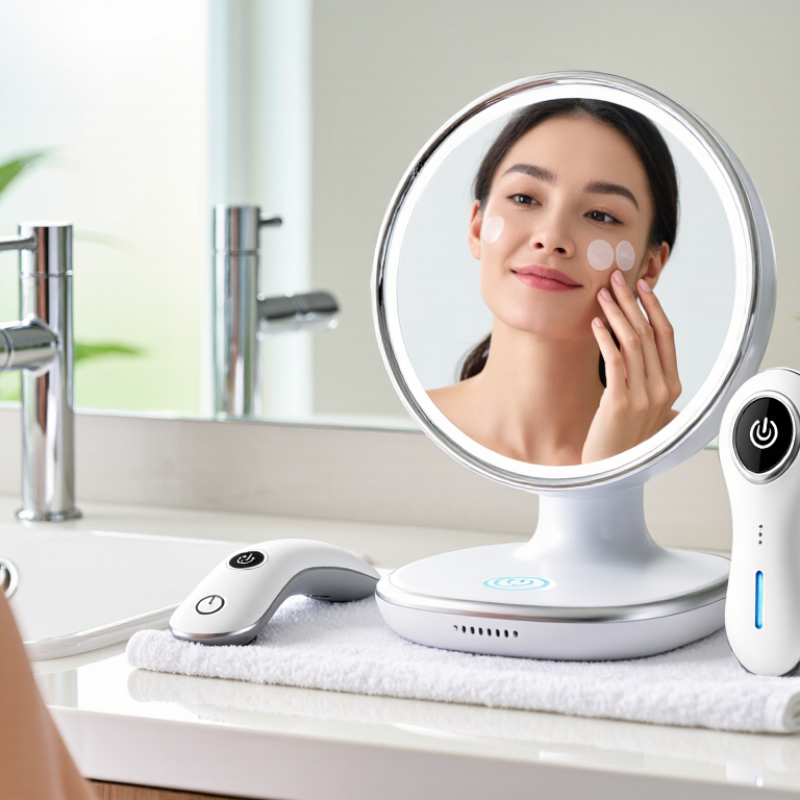
An at-home skin tightening device is a handheld tool designed to deliver energy or stimulation to the skin. Common options use radiofrequency, microcurrent, or light-based technology. They are not all doing the same thing. Radiofrequency devices warm tissue, while microcurrent tools provide low-level electrical stimulation. Light-based devices use specific wavelengths and may target different skin concerns. Results depend on the device, regular use, and individual skin.
These tools are generally intended for gradual cosmetic changes, not the dramatic effects of an in-office procedure. At-home energy levels are typically limited, and evidence varies by technology. A smoother-looking face one morning is not proof of lasting tightening. That distinction matters.
To use one, start with clean, dry skin and follow the device’s manual. Apply conductive gel only when the instructions require it. Glide the device slowly over the recommended areas; avoid lingering in one spot. Keep it away from eyelids, irritated skin, and open cuts. Stop if you feel pain or unusual heat. Check with a qualified health professional before use if you have a medical condition, an implanted electronic device, or concerns about pregnancy. Consistency may help, but more frequent use is not necessarily better.
At-home skin-tightening devices use energy to influence skin or underlying tissue. Radiofrequency (RF) sends electrical energy into the skin, creating controlled heat. This may encourage collagen fibers to contract and support gradual collagen remodeling. Results depend on energy level, contact, and regular use. More heat is not automatically better.
Other devices work differently. Microcurrent delivers a mild electrical current, mainly affecting facial muscles and temporary appearance. LED devices use light; they may support cellular activity, but they should not be treated as equivalent to RF. Focused ultrasound targets deeper tissue, yet home devices generally use lower energy than professional systems. The FDA notes that non-invasive energy treatments can have risks and variable results, so device instructions and safety features matter.
The market’s growth is not proof of effectiveness: Grand View Research estimated the global skin-tightening market at about US$1.2 billion in 2023. That is commercial data, not clinical evidence. Research on professional treatments cannot automatically validate home devices. Check the exact technology, intended treatment area, and published testing. Use gel when required, keep the applicator moving, and stop if you feel pain or notice persistent redness. Improvement is usually gradual. Sometimes subtle. Skin changes with age, and devices cannot erase that.
| Device type | How it works | Typical at-home use | What to expect | Key precautions |
|---|---|---|---|---|
| Radiofrequency (RF) | Uses electrical energy to warm tissue. Heating may support collagen remodeling, but the depth and effect depend on the device and its settings. | Use only on the areas and for the session length specified in the device instructions. Keep the applicator moving if directed; use the recommended conductive gel when required. | At-home results are generally gradual and may be subtle. Home devices are not equivalent to professional procedures, and results vary. | Stop if you feel pain or excessive heat. Do not use over irritated or broken skin, or where the manual advises against use. Follow all warnings about implants and medical conditions. |
| Microcurrent | Delivers low-level electrical currents to the skin and underlying tissues. It is often marketed for temporary facial toning or a more lifted appearance; this is not the same as permanently tightening skin. | Apply the specified conductive gel and glide the device along the recommended paths. Follow the manual’s session frequency and duration. | Any visible effect may be temporary, and evidence for lasting at-home lifting is limited. | Check the manual before use if you have an implanted electronic device, are pregnant, have a seizure disorder, or have another relevant medical condition. Avoid the front of the neck and eyes unless the device instructions specifically permit treatment there. |
| LED light | Uses particular wavelengths of light to affect skin cells. Red and near-infrared light are commonly used in consumer devices, but LED treatment should not be assumed to produce substantial skin tightening. | Use on clean, dry skin for the device’s stated session time and at its recommended distance or contact position. | The response depends on wavelength, dose, device quality, and regular use. Evidence and results vary; changes, if any, may be modest. | Use eye protection when instructed. Ask a healthcare professional before use if you have a light-sensitive condition or take medication that increases light sensitivity. |
| Ultrasound-based devices | Some devices use sound energy to deliver heat at targeted depths. Technologies and energy levels differ substantially between professional systems and products intended for home use. | Follow the product’s instructions exactly, including approved treatment zones, coupling medium, and session spacing. Do not improvise settings or treatment paths. | Do not assume a home device produces the same effect as a clinic treatment. The amount of tightening achievable at home is uncertain and varies by device. | Avoid areas excluded by the manual, especially near the eyes, thyroid, or major blood vessels. Consult a qualified clinician if you are unsure whether the device is suitable for you. |
| Safe-use routine | A gradual, consistent routine reduces the chance of irritation from overuse. Device instructions take priority because technologies and recommended schedules differ. | Patch-test if advised, start at the recommended setting, clean the device as directed, and record sessions. Do not increase treatment time or frequency to try to speed up results. | Assess changes over several weeks using consistent lighting and photos. Stop and seek medical advice if a reaction is persistent or severe. | Use sunscreen during the day. A dermatologist can help assess skin laxity, suitability, and realistic treatment options, particularly if you have a skin condition or recent procedure. |
General information only. Always follow the instructions and safety warnings supplied with the specific device; at-home devices are not a substitute for medical advice or professional treatment.
Before using a home skin-tightening device, check its technology, instructions, and safety warnings. “Skin tightening” may refer to radiofrequency, light, or other energy-based treatments, and their risks differ. Inspect the device for cracks, frayed cables, or a dirty treatment head. Read the manual, confirm the recommended skin areas, and check whether the device is suitable for your skin tone and health history. Pause if you have irritation, a wound, or unusual sensitivity. A small test area can help reveal discomfort, but it cannot guarantee safety. Small details matter.
Pay special attention to needle-based devices. The US Food and Drug Administration’s safety communication on radiofrequency microneedling lists burns, scarring, fat loss, disfigurement, and nerve damage among reported serious complications. This warning concerns RF microneedling procedures; it should not be treated as a risk estimate for every non-invasive home device. Still, it shows why you should identify the device type rather than rely on a broad “tightening” label. Do not use a device near the eyes or over broken skin unless its instructions explicitly allow it. If the manual is unclear, or treatment causes pain, blistering, or persistent redness, stop and seek advice from a qualified clinician. I would not assume a stronger setting works better.
Begin with clean, dry skin and remove jewelry near the treatment area. Read the device instructions carefully, since energy levels and contact products differ between models. If the manual requires conductive gel, apply a thin, even layer. Keep the device away from eyelids, the front of the neck, and any irritated or broken skin unless its instructions specifically allow treatment there.
Choose the lowest recommended setting for your first session. Place the treatment head flat against your skin, then move it slowly in the direction shown in the guide. Keep it moving. Do not press hard or hold it in one spot; warmth can feel mild, but pain or persistent redness is a reason to stop. Treat one small area at a time, and follow the stated session length rather than adding extra minutes for faster results. That part can feel tempting.
Afterward, clean the device as directed and use a gentle moisturizer. Follow the recommended schedule, and take a photo in consistent lighting if you want to track gradual changes. Results vary, and home devices may offer modest effects rather than a dramatic lift. If you have a skin condition, an implanted electronic device, or uncertainty about whether treatment is suitable, ask a qualified healthcare professional before use.
After using an at-home skin-tightening device, give your skin a few quiet minutes. Wash away any remaining gel with lukewarm water, then pat your face dry with a clean, soft towel. Avoid rubbing, especially around the cheeks and jaw. Apply a simple, fragrance-free moisturizer if your skin feels dry. Let it settle.
For the rest of the day, watch how your skin responds. Mild warmth may fade, but stop using the device if you notice pain, strong redness, swelling, or irritation. Avoid exfoliating acids or scrubs while your skin feels sensitive, and use sunscreen before daytime outdoor exposure. If a reaction persists, ask a qualified healthcare professional for advice.
Care for the device, too. Turn it off and unplug it before cleaning. Wipe the treatment surface with a soft cloth, following the device’s instructions; do not immerse it unless the manual specifically allows this. Check for residue around the edges. Small details matter. Let the device dry completely, then store it in a clean, cool place away from moisture and direct sunlight. I sometimes think people rush this part; a damp device is not ready for storage.
Identify its technology and read the manual. Check for cracks, frayed cables, or a dirty treatment head. Small details matter.
No. Check which areas the instructions permit. Avoid eyelids, the front of the neck, and irritated or broken skin unless the manual specifically allows treatment there.
Start with clean, dry skin and remove nearby jewelry. Use conductive gel only if required. Choose the lowest recommended setting.
Keep it flat against your skin and move it slowly as directed. Do not press hard or hold it in one spot. Keep it moving.
Mild warmth may occur, but stop if you feel pain or develop persistent redness. Blistering also calls for stopping and seeking qualified advice.
No. Serious complications have been reported with radiofrequency microneedling procedures, but those warnings are not a risk estimate for every non-invasive home device. Check the device type.
Follow the stated session length. Extra minutes are not a shortcut to faster results. That part can be tempting.
Clean it as directed and apply a gentle moisturizer. Follow the recommended schedule. Photos in similar lighting can help track gradual changes.
Ask if you have a skin condition, an implanted electronic device, or uncertainty about suitability. A small test area may reveal discomfort, but it cannot guarantee safety. I would not assume more intensity is better.
This guide explains what an at-home skin tightening device is and how different devices may use energy or gentle stimulation to support the appearance of firmer-looking skin. Before use, check the device instructions, make sure it is suitable for your skin and the area you plan to treat, and inspect it for damage. Cleanse and dry your skin, and do a small patch test if recommended. Avoid irritated or broken skin, and stop if you feel pain or unusual discomfort.
How to use an at home skin tightening device depends on its design, so follow its instructions for treatment settings, movement, and duration. Use it only on the intended areas, without pressing harder than directed. After treatment, apply a gentle moisturizer and protect exposed skin from the sun. Clean and store the device as instructed, and allow your skin time to recover between sessions.
